

Introduction
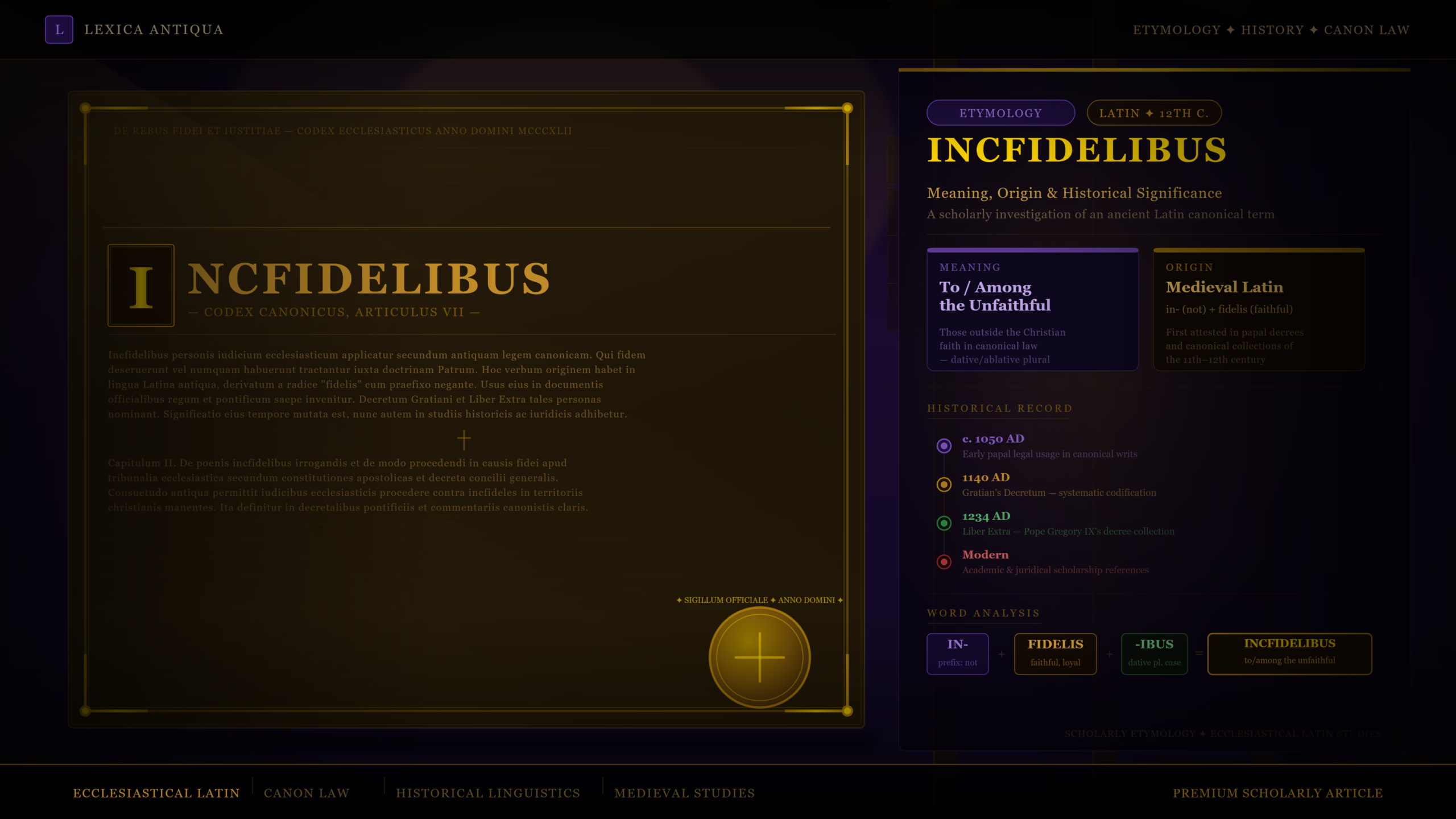
The word “incfidelibus” often appears in online searches because people encounter it in historical texts, religious references, genealogy records, academic writings, or old ecclesiastical documents. Yet when they search for it, they frequently discover a surprising problem: the term itself seems difficult to define, and reliable explanations are scattered across specialized sources.
The confusion stems from the fact that incfidelibus is usually connected to the Latin phrase “in partibus infidelium,” a historical designation used within the Christian church. Over centuries, this expression became associated with bishops assigned to dioceses that no longer functioned as active Christian jurisdictions. The phrase carries linguistic, religious, political, and historical significance that reaches far beyond its literal translation.
Understanding incfidelibus requires more than a dictionary definition. It involves exploring medieval Christianity, the expansion and contraction of ecclesiastical territories, relations between religious communities, and the evolution of church administration. For historians, theologians, students, and curious readers, the term offers a fascinating glimpse into how institutions adapt when geography, politics, and faith intersect.
This guide provides a comprehensive explanation of the meaning of incfidelibus, its historical origins, its connection to church titles, common misconceptions, and its relevance in modern discussions. Whether you encountered the term in an academic article, church history book, or archival document, this article will help clarify exactly what it means and why it continues to attract attention centuries later.
What Does Incfidelibus Mean?
The term incfidelibus is generally understood as a reference to the Latin expression:
In partibus infidelium
Translated literally, it means:
“In the lands of the unbelievers” or “in the regions of the non-believers.”
Historically, the phrase referred to territories that were once under Christian ecclesiastical authority but had come under the control of non-Christian rulers or populations.
In many modern searches, incfidelibus appears as:
- A misspelling
- A shortened reference
- A fragmented citation from historical documents
- A misunderstood Latin term
Despite the spelling variations, most references ultimately point back to the concept of in partibus infidelium.
Linguistic Breakdown of the Phrase
To understand the term fully, it helps to examine the Latin components.
| Latin Word | Meaning |
|---|---|
| In | In |
| Partibus | Regions, territories, districts |
| Infidelium | Of unbelievers or non-Christians |
Together, the phrase signifies territories regarded by medieval church authorities as lying outside Christian governance.
The word infidelium derives from the Latin root infidelis, meaning “unfaithful” or “non-believing.”
In historical Christian usage, it commonly referred to those who did not belong to the Christian faith.
Historical Origins of In Partibus Infidelium
The origins of the phrase are closely tied to the changing religious and political landscape of the medieval world.
The Early Christian World
During the first centuries of Christianity, churches were established throughout:
- North Africa
- Asia Minor
- Syria
- Palestine
- Egypt
- Parts of the Middle East
Many of these regions became major centers of Christian scholarship and worship.
Cities such as:
- Alexandria
- Antioch
- Jerusalem
were among the most influential Christian communities in the world.
Political Changes and Religious Shifts
Beginning in the seventh century, dramatic political transformations reshaped these territories.
Large areas previously governed by Christian authorities came under Muslim rule through a series of military and political developments.
Although Christianity continued to exist in many of these regions, ecclesiastical structures often changed significantly.
As a result:
- Some dioceses disappeared.
- Some bishoprics became inactive.
- Certain church jurisdictions survived only in name.
The church still recognized many of these dioceses historically, even when no active Christian administration remained.
This situation eventually gave rise to the use of honorary episcopal titles.
Why Bishops Were Given Titles “In Partibus Infidelium”
One of the most important historical uses of the phrase involved church administration.
The Problem
The church often needed bishops for roles that did not involve governing a geographical diocese.
Examples included:
- Papal diplomats
- Auxiliary bishops
- Missionary bishops
- Administrative church officials
Traditionally, every bishop was associated with a diocese.
But what diocese should be assigned to a bishop who did not oversee an active territory?
The Solution
The church began assigning such bishops to dioceses that no longer functioned in practice.
These dioceses existed historically but lacked active governance.
The bishops were therefore designated as bishops of sees located in partibus infidelium.
In effect, the title preserved historical dioceses while allowing bishops to hold canonical status.
Understanding Titular Sees
The concept eventually evolved into what are now known as titular sees.
A titular see is:
A bishopric that exists in title only and is assigned to bishops who do not govern a residential diocese.
Today, the term in partibus infidelium is largely obsolete.
Instead, churches generally use the more neutral term:
Titular bishop
This modern terminology avoids the historical implications associated with the word “infidel.”
Examples of Historical Titular Sees
Many ancient Christian centers eventually became titular sees.
Examples have included former dioceses located in:
- Egypt
- Turkey
- Syria
- Tunisia
- Algeria
- Israel
- Jordan
These dioceses often trace their origins to the earliest centuries of Christianity.
Although active administration disappeared, their names continued within church records.
Why the Phrase Became Controversial
Language evolves, and so do cultural sensitivities.
The phrase in partibus infidelium increasingly attracted criticism for several reasons.
Perceived Religious Exclusivity
The word infidelium literally identifies people outside a particular faith tradition.
Over time, many regarded the expression as:
- Outdated
- Exclusionary
- Historically loaded
As interfaith dialogue expanded, such terminology became less acceptable.
Changing Religious Relations
Modern Christianity engages extensively with:
- Islam
- Judaism
- Hinduism
- Buddhism
- Other world religions
Using language that labels entire populations as “infidels” no longer aligned with contemporary approaches to religious engagement.
Administrative Modernization
Church administrators increasingly preferred terminology that focused on organizational function rather than historical religious divisions.
Thus, “titular see” became the preferred designation.
The Shift Away from In Partibus Infidelium
The phrase gradually disappeared from official usage.
By the nineteenth century, church authorities increasingly recognized the need for alternative terminology.
The designation titular bishop eventually replaced the older formula.
This shift reflected:
- Administrative clarity
- Diplomatic sensitivity
- Theological modernization
- Greater cultural awareness
Today, most official church documents use “titular see” rather than “in partibus infidelium.”
Common Places Where People Encounter the Term
Many modern readers discover incfidelibus unexpectedly.
Historical Books
Church history texts frequently reference the phrase when discussing:
- Medieval Christianity
- Episcopal appointments
- Ecclesiastical governance
Genealogy Research
Researchers tracing family records sometimes encounter:
- Baptismal documents
- Clerical records
- Historical church archives
These records may contain Latin abbreviations or references related to titular dioceses.
Academic Publications
Scholars studying:
- Theology
- Religious history
- Medieval studies
- Canon law
often discuss the concept in historical contexts.
Digital Archives
As old manuscripts become digitized, search engines increasingly surface unfamiliar Latin terminology.
This explains why many people search for terms such as:
- incfidelibus
- infidelium
- in partibus infidelium
- titular bishop meaning
- historical bishop titles
Common Misconceptions About Incfidelibus
Misconception 1: It Is a Modern Religious Label
Not true.
The phrase is primarily historical and ecclesiastical.
Modern church usage largely avoids it.
Misconception 2: It Refers to One Specific Place
Incorrect.
The phrase refers to many territories historically considered outside Christian governance.
It is not tied to a single geographic location.
Misconception 3: It Was Only Used During the Crusades
The expression is associated with medieval history but remained in ecclesiastical usage long after the Crusades ended.
Misconception 4: The Term Is Still Widely Used Today
Modern church administration generally favors “titular see” and “titular bishop.”
The historical phrase is rarely used officially.
Expert Analysis: Why the Term Matters Historically
At first glance, incfidelibus may seem like an obscure Latin expression with little relevance today.
Yet historians view it as an important window into institutional adaptation.
The term reveals how religious organizations:
- Preserved continuity
- Maintained historical memory
- Adapted to political change
- Managed administrative requirements
Rather than abandoning vanished dioceses, church authorities incorporated them into a broader governance structure.
This approach allowed historical jurisdictions to remain part of ecclesiastical tradition even when their original communities had transformed.
The phrase therefore reflects a larger historical phenomenon:
How institutions preserve identity while responding to changing realities.
Practical Example
Imagine an ancient city that once had a thriving Christian bishopric.
Over centuries:
- Political control changes.
- Population demographics shift.
- The original diocese ceases functioning.
- Church records still recognize its historical existence.
Centuries later, a new bishop is appointed as a diplomatic representative.
Instead of assigning him to an active diocese already occupied by another bishop, the church grants him the title associated with that ancient city.
That bishop becomes a titular bishop connected to a historical see formerly described as in partibus infidelium.
Quick Reference Table
| Topic | Explanation |
|---|---|
| Incfidelibus | Usually a variation or misspelling related to in partibus infidelium |
| Literal Meaning | “In the lands of the unbelievers” |
| Historical Use | Designation for certain inactive dioceses |
| Main Purpose | Assigning titles to bishops without active dioceses |
| Modern Equivalent | Titular see or titular bishop |
| Current Official Usage | Rare and largely obsolete |
| Historical Importance | Preserves continuity of ancient dioceses |
Best Practices for Researchers Encountering the Term
If you find incfidelibus in a document:
Verify the Original Latin
Old texts often contain transcription errors.
Check whether the intended phrase is:
in partibus infidelium
Consider Historical Context
Determine:
- Date of the document
- Religious affiliation
- Geographic region
- Administrative purpose
Examine Ecclesiastical Records
Church archives frequently provide additional context regarding titular sees and episcopal appointments.
Avoid Applying Modern Meanings
Interpret the term within its historical framework rather than through contemporary language standards alone.
Frequently Asked Questions
What does incfidelibus mean?
The term generally refers to or derives from the Latin phrase in partibus infidelium, meaning “in the lands of the unbelievers.” It historically described certain dioceses located in territories outside Christian control.
Is incfidelibus a real Latin word?
It is often encountered as a misspelling, abbreviation, or variation related to infidelium within the phrase in partibus infidelium.
What is a bishop in partibus infidelium?
Historically, it was a bishop assigned to a titular diocese rather than an active residential diocese.
Is the phrase still used today?
Rarely. Modern church administration generally uses the terms “titular see” and “titular bishop.”
Why was the phrase replaced?
Many considered the terminology outdated and less appropriate for modern interfaith relations and contemporary ecclesiastical language.
What is a titular see?
A titular see is a historical diocese that exists in title only and is assigned to bishops who do not govern an active diocese.
Does the term have political significance?
Historically, yes. It reflected changing political and religious control of territories once associated with Christian dioceses.
Is the phrase offensive today?
Some people regard it as outdated because the word “infidel” can carry negative connotations. Modern institutions generally avoid using it.
Where are titular sees located?
Many are associated with ancient dioceses in regions such as North Africa, the Middle East, and parts of Asia Minor.
Why do people still search for incfidelibus?
Most searches occur because readers encounter the term in historical texts, religious documents, genealogical records, academic studies, or digitized archives.
Final Thoughts
The keyword “incfidelibus” opens the door to a surprisingly rich chapter of religious and historical scholarship. While the term itself is often a misspelling or shorthand reference, it leads directly to the influential Latin expression in partibus infidelium—a phrase that once played a significant role in church administration and the preservation of ancient diocesan traditions.
Far more than a linguistic curiosity, the concept reflects centuries of political change, religious transformation, and institutional continuity. Understanding its meaning helps illuminate how historical churches navigated shifting borders, evolving populations, and administrative necessities while maintaining links to their earliest foundations. For researchers, students, and history enthusiasts, the term remains a fascinating reminder that even obscure Latin expressions can reveal remarkable stories about the past.
Read Also: ByteWave: How Modern Digital Innovation Is Reshaping Business Through Technology












Leave a Reply