

Introduction
Technology companies emerge every year, yet only a handful manage to stand out in a crowded market filled with software vendors, IT consultants, cloud providers, and digital transformation specialists.
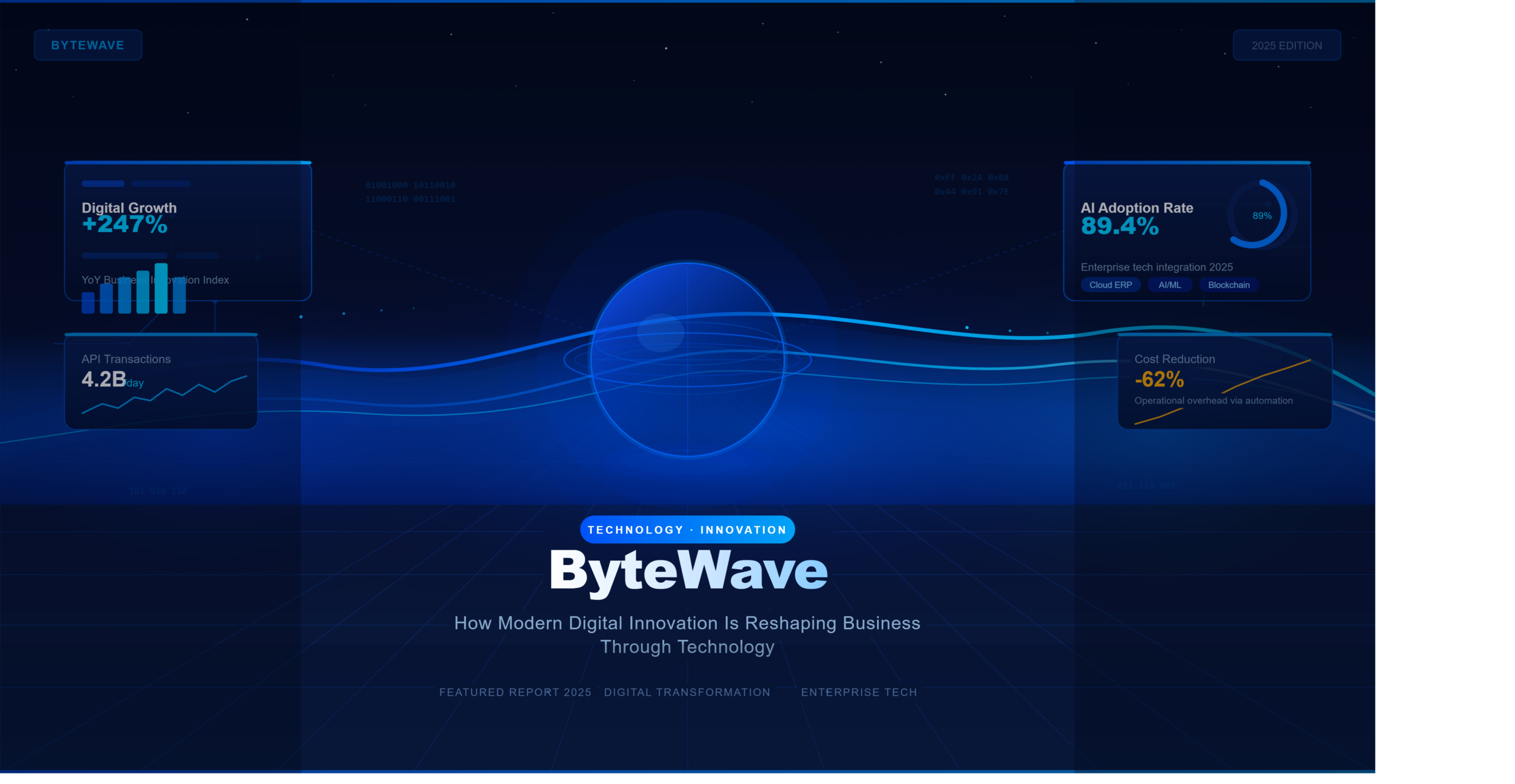
ByteWave is a name increasingly associated with digital innovation, software engineering, IT services, cloud technologies, cybersecurity, and business transformation. Across different markets, companies operating under the ByteWave brand position themselves around a common mission: helping organizations use technology more effectively to solve operational challenges, improve efficiency, and create sustainable growth.
For business leaders, entrepreneurs, startup founders, and technology decision-makers, the challenge is rarely a lack of technology. The challenge is choosing the right technology, implementing it correctly, and ensuring it delivers measurable business value.
That is where firms like ByteWave enter the picture.
Rather than treating technology as a collection of tools, ByteWave-oriented service models focus on creating integrated digital ecosystems that support business objectives. Whether that involves custom software, web development, cloud infrastructure, cybersecurity, mobile applications, automation, or digital consulting, the goal remains the same: turning technology into a competitive advantage.
This guide explores what ByteWave represents, the services typically associated with the brand, its role in digital transformation, practical applications, benefits, challenges, and what businesses should consider when evaluating technology partners.
What Is ByteWave?
ByteWave is commonly associated with technology-driven organizations that provide digital services and software solutions to businesses. Their offerings typically include:
- Custom software development
- Web application development
- Mobile application development
- Cloud solutions
- IT consulting
- Infrastructure management
- Cybersecurity services
- Digital transformation strategies
- System integration
- Business automation
- UI/UX design
- SaaS development
The name itself combines two technology-oriented concepts:
- Byte – representing digital information and computing.
- Wave – symbolizing movement, innovation, connectivity, and progress.
Together, the term suggests the flow of digital innovation through modern organizations.
Why Businesses Need Digital Transformation Partners Like ByteWave
Many companies still operate with fragmented systems.
Common problems include:
| Business Challenge | Impact |
|---|---|
| Manual processes | Reduced productivity |
| Legacy software | Higher operational costs |
| Data silos | Poor decision-making |
| Weak cybersecurity | Increased risk exposure |
| Limited automation | Slower growth |
| Outdated customer experiences | Reduced customer retention |
Organizations often know they need modernization but lack the internal expertise to execute it effectively.
Technology consulting and implementation firms help bridge that gap by:
- Assessing current systems
- Identifying inefficiencies
- Recommending solutions
- Building custom platforms
- Managing implementation
- Providing ongoing support
This approach allows companies to focus on business operations while specialists handle the technical complexities.
Core Services Associated With ByteWave
1. Custom Software Development
One-size-fits-all software rarely solves unique business challenges.
Custom software development allows organizations to create systems tailored to their exact requirements.
Examples include:
- Enterprise Resource Planning (ERP)
- Customer Relationship Management (CRM)
- Inventory management systems
- Logistics platforms
- Financial management software
- Healthcare solutions
- Educational technology platforms
Benefits
- Greater flexibility
- Improved scalability
- Better performance
- Reduced dependency on third-party tools
- Competitive differentiation
Many ByteWave-style firms emphasize custom development because it aligns technology directly with business workflows.
2. Website Design and Development
A company’s website often serves as its most important digital asset.
Modern websites must deliver:
- Fast loading speeds
- Mobile responsiveness
- Strong security
- User-friendly navigation
- SEO optimization
- Conversion-focused design
Businesses increasingly expect websites to function as:
- Sales platforms
- Customer service portals
- Marketing hubs
- Lead-generation systems
Professional development ensures these functions work seamlessly together.
3. Mobile App Development
Mobile usage continues to dominate digital engagement.
Businesses are investing heavily in:
- iOS applications
- Android applications
- Cross-platform solutions
- Enterprise mobile apps
Popular use cases include:
- E-commerce
- Banking
- Healthcare
- Education
- Transportation
- Customer engagement
A well-designed mobile application can significantly improve customer retention and brand loyalty.
4. Cloud Computing Solutions
Cloud adoption has transformed how businesses operate.
Instead of investing heavily in physical infrastructure, organizations can use cloud environments for:
- Data storage
- Application hosting
- Disaster recovery
- Collaboration
- Analytics
Benefits include:
Scalability
Resources can expand as business demands increase.
Cost Efficiency
Pay only for resources used.
Accessibility
Teams can work from virtually anywhere.
Security
Modern cloud providers offer advanced protection mechanisms.
Cloud migration and management remain among the fastest-growing areas of technology consulting.
5. Cybersecurity Services
Cyber threats have become a boardroom issue rather than simply an IT concern.
Businesses face risks from:
- Ransomware
- Phishing attacks
- Data breaches
- Insider threats
- Malware
- Identity theft
Cybersecurity services often include:
- Vulnerability assessments
- Security monitoring
- Network protection
- Endpoint security
- Compliance support
- Employee awareness training
Strong cybersecurity practices help preserve trust while reducing operational risk.
The Growing Importance of Business Automation
One of the most transformative areas in modern business technology is automation.
Automation reduces repetitive tasks and allows employees to focus on higher-value work.
Examples include:
Sales Automation
- Lead tracking
- Follow-up workflows
- Customer segmentation
Finance Automation
- Invoice processing
- Expense management
- Reporting
Customer Support Automation
- Chatbots
- Ticket routing
- Self-service systems
Operations Automation
- Inventory updates
- Workflow approvals
- Resource scheduling
Automation frequently delivers some of the fastest returns on technology investments.
How ByteWave Supports Digital Transformation
Digital transformation is often misunderstood.
Many assume it means purchasing new software.
In reality, transformation involves changing how an organization operates.
Successful digital transformation typically follows these stages:
Stage 1: Assessment
Current systems are evaluated.
Stage 2: Strategy Development
Technology priorities are identified.
Stage 3: Solution Design
Custom systems and workflows are planned.
Stage 4: Implementation
Solutions are deployed.
Stage 5: Optimization
Performance data drives ongoing improvements.
Technology partners play a critical role throughout this journey by providing expertise that internal teams may not possess.
Real-World Applications
Manufacturing
Manufacturers use digital systems for:
- Production monitoring
- Inventory tracking
- Predictive maintenance
- Supply chain visibility
Benefits include:
- Reduced downtime
- Lower waste
- Improved efficiency
Healthcare
Healthcare organizations leverage technology for:
- Electronic health records
- Telemedicine
- Appointment management
- Patient communication
Benefits include:
- Better patient experiences
- Increased operational efficiency
- Improved compliance
Retail and E-Commerce
Retailers implement:
- Personalized shopping experiences
- Inventory management
- Customer analytics
- Omnichannel platforms
Benefits include:
- Higher conversion rates
- Better customer retention
- Improved profitability
Education
Educational institutions increasingly rely on:
- Learning management systems
- Virtual classrooms
- Student portals
- Performance analytics
These tools help improve accessibility and learning outcomes.
Expert Analysis: Why Technology Projects Fail
Despite significant investments, many technology initiatives fail to achieve their goals.
The causes are surprisingly consistent.
Poor Planning
Organizations rush implementation without defining clear objectives.
Lack of User Adoption
Employees resist systems they do not understand.
Weak Leadership Support
Digital transformation requires executive commitment.
Choosing Technology Before Defining Problems
Technology should solve business challenges—not the other way around.
Underestimating Change Management
People, not software, determine project success.
The strongest technology partners recognize these risks early and build processes around mitigating them.
Common Myths About Digital Transformation
Myth 1: Only Large Enterprises Need It
Small and medium-sized businesses often gain even greater benefits because modernization can dramatically improve efficiency.
Myth 2: More Technology Equals Better Results
Technology without strategy often creates additional complexity.
Myth 3: Automation Eliminates Jobs
In many cases, automation shifts employees toward higher-value activities rather than replacing them entirely.
Myth 4: Cybersecurity Is Only an IT Problem
Cybersecurity affects operations, reputation, legal compliance, and customer trust.
How to Choose the Right Technology Partner
Use the following checklist when evaluating providers.
Technical Expertise
- Proven development capabilities
- Modern technology stack
- Cloud experience
Industry Knowledge
- Relevant project experience
- Understanding of business challenges
Communication
- Transparent reporting
- Clear timelines
- Regular updates
Security Focus
- Security-first development
- Compliance awareness
Long-Term Support
- Maintenance services
- Ongoing optimization
- Training programs
ByteWave Benefits at a Glance
| Area | Potential Benefit |
|---|---|
| Software Development | Customized business solutions |
| Mobile Apps | Increased customer engagement |
| Cloud Computing | Improved scalability |
| Cybersecurity | Reduced business risk |
| Automation | Higher efficiency |
| Analytics | Better decision-making |
| Digital Transformation | Sustainable growth |
Best Practices for Maximizing Technology Investments
Start With Business Goals
Technology should support measurable outcomes.
Prioritize User Experience
Adoption increases when systems are intuitive.
Build for Scalability
Growth should not require rebuilding everything from scratch.
Invest in Security Early
Retrofitting security is expensive and risky.
Measure Performance
Use KPIs to evaluate technology effectiveness.
Continuously Improve
Technology evolves quickly; optimization should be ongoing.
The Future of ByteWave and Digital Innovation
Technology service providers are increasingly moving beyond traditional software development.
Future growth areas include:
- Artificial Intelligence
- Machine Learning
- Intelligent Automation
- Predictive Analytics
- Cloud-Native Applications
- Edge Computing
- Cybersecurity Intelligence
- Generative AI Solutions
Organizations that embrace these technologies strategically will likely outperform competitors that delay modernization.
The companies succeeding in the next decade will not necessarily be the largest or oldest. They will be the most adaptable.
Technology partners capable of combining innovation with practical business outcomes will become increasingly valuable.
Final Thoughts
ByteWave represents more than a technology provider name. It reflects a broader movement toward digital-first business operations, intelligent automation, scalable software, cloud adoption, and strategic innovation. Across various markets, ByteWave-branded organizations share a focus on helping businesses modernize, improve efficiency, strengthen security, and unlock new opportunities through technology.
For organizations navigating digital transformation, the most important lesson is simple: technology alone rarely creates success. Success comes from aligning technology with business goals, user needs, operational realities, and long-term strategy.
Companies that approach digital transformation thoughtfully position themselves to compete more effectively, adapt more quickly, and create greater value in an increasingly technology-driven economy.
Frequently Asked Questions (FAQ)
What is ByteWave?
ByteWave is commonly associated with technology and digital solutions companies that provide software development, IT consulting, cloud services, cybersecurity, automation, and digital transformation solutions.
What services does ByteWave typically offer?
Services often include custom software development, website development, mobile applications, cloud computing, cybersecurity, business automation, and IT consulting.
Is ByteWave suitable for small businesses?
Yes. Many technology service providers work with startups, small businesses, and enterprises by tailoring solutions to organizational size and requirements.
Why is digital transformation important?
Digital transformation helps organizations improve efficiency, reduce costs, enhance customer experiences, and remain competitive.
How does cloud computing benefit businesses?
Cloud computing provides scalability, flexibility, cost savings, accessibility, and improved disaster recovery capabilities.
What role does cybersecurity play in digital transformation?
Cybersecurity protects systems, data, customers, and business operations while supporting compliance and risk management.
Can ByteWave help with custom software projects?
Custom software development is one of the most common services associated with ByteWave technology firms.
What industries benefit most from digital solutions?
Manufacturing, healthcare, retail, finance, logistics, education, and professional services all benefit significantly from modern digital technologies.
How long does a digital transformation project take?
Project timelines vary depending on complexity, scope, infrastructure requirements, and organizational readiness.
What should businesses look for in a technology partner?
Look for technical expertise, industry knowledge, strong communication, security awareness, proven experience, and long-term support capabilities.










Leave a Reply