

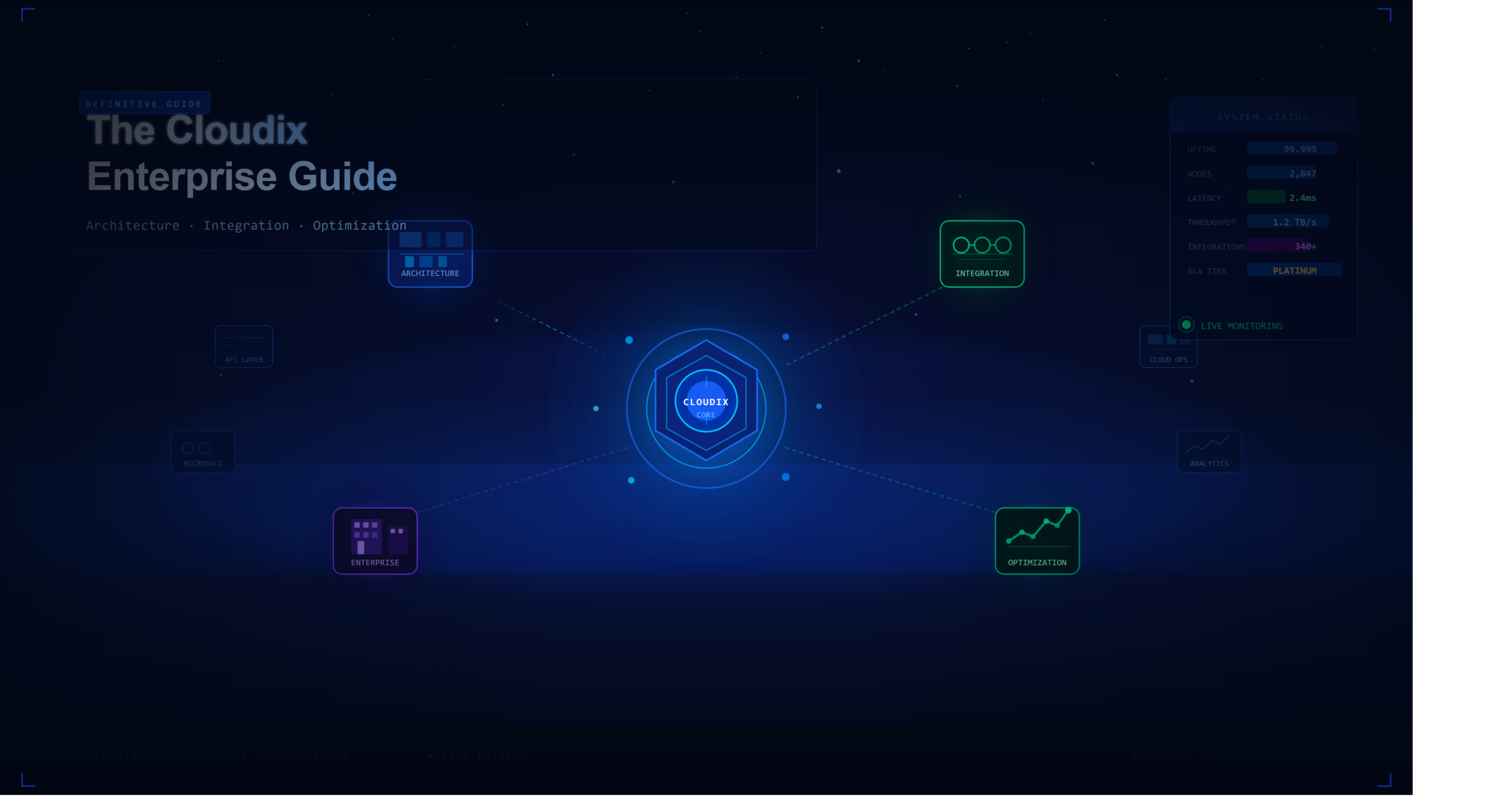
The modern enterprise runs on invisible threads. Every time a consumer buys an item off a retail shelf, an automated sequence triggers a cascade of data points across global supply chains. Behind these seamless interactions lie complex systems engineered to unify disparate applications, handle high-volume data payloads, and maintain ironclad network stability.
Among these technical foundations, Cloudix has emerged as a critical point of interest for enterprise architects, logistics operations directors, and infrastructure engineers alike.
Yet, when technical teams evaluate Cloudix, they often find themselves viewing it through different lenses. For supply chain managers, Cloudix represents an advanced, cloud-native Electronic Data Interchange (EDI) and B2B automation engine that bridges the gap between legacy ERPs and modern retail hubs. For systems administrators and IT directors, it represents an agile, high-performance cloud hosting and managed infrastructure framework engineered to optimize compute efficiency and eliminate vendor lock-in.
This guide provides an exhaustive architectural and operational breakdown of Cloudix across both domains. We will analyze its core systems, step-by-step integration methodologies, and security protocols to help your technical teams leverage its full operational power.
Part 1: Cloudix in the Supply Chain Ecosystem (EDI & B2B Automation)
Modern supply chains cannot afford the latency of manual data entry or fragile, custom-coded API integrations. Within B2B operations, Cloudix serves as an enterprise-grade cloud EDI platform designed to translate, validate, and transmit high-volume business documents between global trading partners.
The Architectural Blueprint of Cloudix EDI
At its core, the platform acts as an intelligent abstraction layer between your internal systems—such as SAP, Oracle NetSuite, or Microsoft Dynamics 365—and the strict, uncompromising data formats required by external distributors, carriers, and retail giants.
The platform’s engine relies on a three-tier processing model:
The Ingestion Layer: This layer handles multi-protocol data intake. It supports secure file transfer mechanisms including AS2 (Applicability Statement 2), SFTP, and RESTful Webhooks. It ingests raw data payloads directly from your enterprise service bus (ESB) or ERP.
The Semantic Translation Engine: Here, the platform executes high-speed parsing of flat files, XML configurations, or JSON payloads into standardized EDI compliance syntaxes. This includes global standards like ANSI X12 (dominant in North America) and EDIFACT (dominant throughout Europe and international shipping).
The Validation & Execution Core: Before a document reaches an external gateway, the platform runs it through an automated business-rule validation sequence. For example, it checks if an Advance Shipping Notice (ASN / EDI 856) contains matching line-item quantities that align perfectly with the originating Purchase Order (PO / EDI 850). If a mismatch occurs, the document is flagged, quarantined, and surfaced on an operations dashboard before a compliance chargeback can occur.
Core Functionalities and Document Mapping
To maximize supply chain efficiency, Cloudix automates the full lifecycle of transactional documents. The table below outlines how standard B2B transactions translate through the system architecture:
| Document Type (X12 / EDIFACT) | Operational Function | Cloudix Automated Automation Event |
| 850 / ORDERS | Purchase Order | Automatically parses incoming orders from retailers and injects them directly into production lines or warehouse management queues. |
| 855 / ORDRSP | Purchase Order Acknowledgment | Validates stock availability in real-time and transmits a line-item verification back to the buyer within minutes. |
| 856 / DESADV | Advance Shipping Notice (ASN) | Syncs with intelligent scales and barcode scanners at the logistics dock to generate precise shipping manifests and SSCC labels. |
| 810 / INVOIC | Commercial Invoice | Matches verified delivery receipts against initial contract pricing to generate and transmit error-free invoices automatically. |
Deep-Dive Integration: Connecting ERPs to Cloudix via REST API
For modern engineering teams, relying purely on old-school batch file processing (like dropping CSVs into an SFTP folder every six hours) introduces unacceptable operational delay. Cloudix circumvents this via native REST APIs, allowing real-time document synchronization.
Below is an architectural scenario of an outbound EDI 810 (Invoice) generation payload. When an order shifts to “Shipped” inside an ERP, the system sends an authenticated POST request to the Cloudix engine to compile and deliver the validated EDI document to the end retailer.
Authentication & Authorization Header
The platform utilizes OAuth 2.0 architecture. Before invoking document endpoints, systems must acquire a bearer token via a secure handshake:
JSON Payload to Cloudix Translation Gateway
Once authenticated, the ERP transmits the structured invoice data to the payload endpoint:
The Engine’s Transformation Response
Upon receiving this JSON payload, the platform’s mapping processor runs the values through a pre-compiled mapping template tailored to the recipient’s target configuration. Within milliseconds, the platform returns a verified tracking record:
This structural agility helps enterprise platforms bypass legacy single-point-of-failure setups, keeping data processing fluid and responsive.
Part 2: Cloudix as High-Performance Infrastructure & Compute Engine
Shifting focus from supply chain logistics to IT infrastructure, Cloudix also operates as an enterprise cloud hosting environment and virtualization framework. Built specifically to counter public cloud hyper-scale monopolies, this deployment pattern emphasizes low latency, clear pricing models, and customizable network topologies.
Architectural Performance Metrics
When migrating enterprise workloads out of legacy data centers, engineers evaluate alternative hosting infrastructures across four key operational criteria:
-
Compute Density Optimization: Utilizing high-frequency AMD EPYC and Intel Xeon Scalable micro-architectures, Cloudix hypervisors eliminate noisy-neighbor bottlenecks through deep kernel-level kernel-based virtual machine (KVM) resource pinning.
-
Storage Throughput Engine: By dropping legacy SATA-based storage in favor of pure PCIe Gen 4/5 NVMe arrays arranged in distributed Ceph pools, the hosting array delivers predictable input/output operations per second (IOPS). This makes it highly effective for transactional database layers like PostgreSQL or high-frequency Redis instances.
-
Anycast Network & BGP Routing: The cloud platform integrates directly with premier Tier-1 network transits. Utilizing dynamic Border Gateway Protocol (BGP) anycast routing, incoming user requests are automatically directed to the geographically optimal network point of presence (PoP), mitigating latency inflation during regional spikes.
-
Predictable Cost-to-Performance Ratio: Unlike hyper-scale environments that apply variable fees to data egress, Cloudix frameworks typically use flat-rate or predictably tiered bandwidth delivery models, protecting enterprise operations budgets from unexpected billing spikes.
Strategic Architecture Analysis: Monolithic Hyper-Scalers vs. Cloudix Infrastructure
Choosing a hosting model requires balancing raw cost against system complexity and architectural flexibility. The evaluation below details where specific engineering advantages reside:
Hyper-Scale Providers (AWS, Azure, Google Cloud Platform)
-
Pros: Massive ecosystem of proprietary microservices; infinite instantaneous scaling thresholds; comprehensive compliance certifications across obscure regional jurisdictions.
-
Cons: Highly complex billing environments; punishing egress data transfer pricing structures; vendor lock-in that makes migrating legacy code bases expensive.
Cloudix Infrastructure Architecture
-
Pros: Straightforward, highly transparent cost metrics; significant cost savings on data-intensive workloads; raw hardware access with bare-metal performance characteristics.
-
Cons: Smaller catalog of turn-key managed microservices; requires internal engineering teams to handle high-level application orchestration layers (e.g., managing your own Kubernetes deployments).
Common Enterprise Implementation Mistakes & Architectural Misconceptions
When deploying or migrating onto Cloudix platforms, enterprise technical units frequently encounter predictable failure modes. Identifying these architectural missteps early ensures smooth operational continuity.
Treating Cloud EDI as a Passive File Storage Target
Many legacy systems administrators make the mistake of treating an EDI engine like an old-school, passive FTP directory. They write unoptimized, hourly batch cron jobs that dump hundreds of un-vetted documents into the pipeline all at once.
-
The Structural Fix: Implement event-driven API triggers. When an invoice or shipment is generated, transmit that individual payload instantly. This maintains balanced system load, speeds up acknowledgment timelines, and lets you catch data anomalies early.
Overlooking Multi-Region Redundancy Configuration
When building infrastructure on alternative cloud frameworks, system administrators sometimes configure their applications within a single localized availability zone, leaving them vulnerable to regional network disruptions.
-
The Structural Fix: Take advantage of BGP anycast tools and set up distributed database replica nodes across multiple data centers. Use a centralized orchestrator like HashiCorp Nomad or an upstream enterprise cluster to coordinate automatic failover.
Hardcoding Partner Mapping Logic Inside the Internal ERP Core
A frequent mistake made by enterprise software development teams is writing customer-specific formatting parameters directly into the internal ERP database schema. This creates highly rigid code that breaks whenever an external retail partner updates their EDI compliance rules.
-
The Structural Fix: Keep your internal ERP data outputs highly standardized and clean (preferably using generic JSON or XML). Let the Cloudix semantic mapping engine handle the specialized formatting rules for each individual partner. This keeps your core systems modular and decoupled.
Strategic Best Practices for Enterprise Engineering Teams
To ensure high-availability performance and long-term reliability, technical teams should implement these operational patterns:
Implement End-to-End Idempotency
Ensure that every API request sent to the document translation engine includes an idempotent token signature (Idempotency-Key: <UUID>). If an ERP experiences a temporary network hiccup and retries an invoice upload payload, the platform will safely process the request without generating duplicate charges or dual-booking shipments.
Configure Active Health Probes and Webhook Retries
Never trust a network link blindly. When configuring notification webhooks—such as automated transaction statuses or system resource alerts—ensure that your target listener platforms respond with a clean 200 OK status within an optimized window (typically under 3000ms). The infrastructure should be configured with an exponential backoff retry strategy to smoothly handle brief receiver-side downtime.
Enforce Role-Based Access Control (RBAC) and Least Privilege
Isolate production data streams strictly from testing activities. Sandbox keys must never have cross-functional access to live supply chain ecosystems or live production host hypervisors. Audit access logs regularly to ensure third-party integrations maintain isolated clearance windows.
Frequently Asked Questions
How does Cloudix handle data security and compliance for sensitive enterprise payloads?
The platform enforces end-to-end data encryption protocols. Data is encrypted in transit using TLS 1.3 transport mechanisms and secured at rest across server arrays via AES-256 cryptographic standards. For corporate compliance initiatives, the platform supports precise user isolation configurations, auditable access tracking, and strict adherence to enterprise data governance frameworks.
Can the supply chain engine interface with legacy ERP architectures that lack REST API capabilities?
Yes. While native API routing delivers optimal performance, the platform maintains comprehensive support for legacy integration patterns. It can process automated file drops across AS2, SFTP, and FTPS connections, and parses older file formats like flat positional files, fixed-width strings, or CSV structures.
What mechanism does the infrastructure use to mitigate noisy-neighbor resource degradation?
The hosting platform leverages advanced KVM virtualization coupled with cgroups resource allocation directly at the hypervisor layer. This guarantees strict performance boundaries for every deployment instance, ensuring that neighboring virtual machines cannot compromise your dedicated CPU cycles, memory allocations, or storage bus throughput.
How are EDI compliance chargebacks managed within the system?
The platform uses an automated pre-validation engine that screens all outgoing documents before they clear the transport gate. If an individual document deviates from your trading partner’s strict compliance parameters—such as missing line-item codes or invalid date formats—the system automatically quarantines the transaction and alerts your team, allowing you to fix errors before a penalty occurs.
What is the typical deployment timeline for migrating from a legacy EDI provider?
Transitioning to the platform typically takes anywhere from a few days to several weeks, depending on the number of trading partners and the complexity of your custom document mapping. Because the platform separates the underlying communication protocols from your data mapping templates, engineering teams can configure new communication lines quickly without needing to rewrite their core data processing logic from scratch.





Leave a Reply