

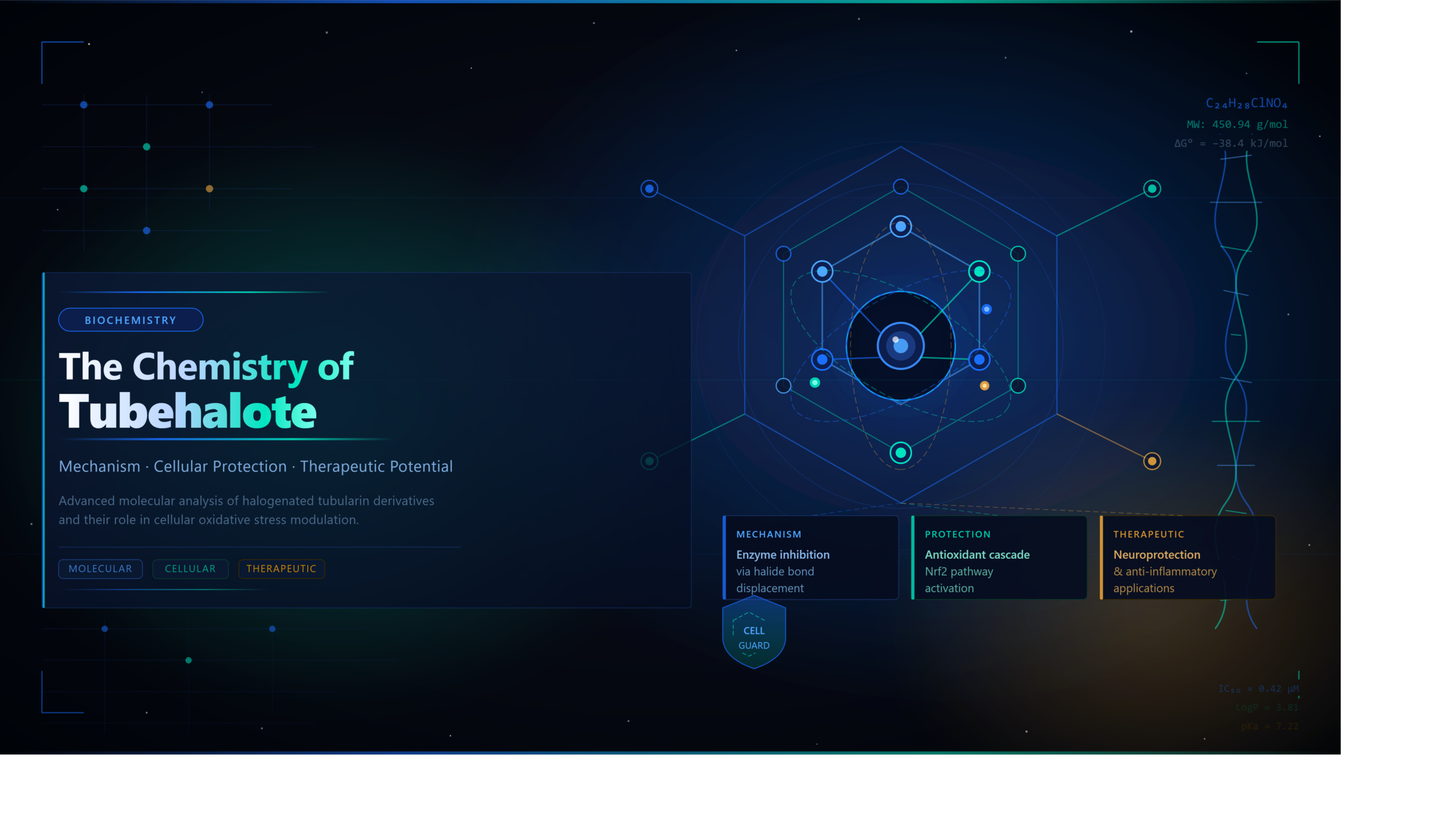
The relentless search for molecular stabilizers in biotechnology and medicine frequently leads researchers to extremophiles—organisms capable of thriving in environments that would instantly prove lethal to human cells. At the heart of this survival lies a sophisticated class of protective compounds known as chemical chaperones. Within this biochemical landscape, a specific disaccharide derivative known as Tubehalote (synthesized as a structural or functional analog of the naturally occurring alpha-linked disaccharide trehalose) has emerged as a formidable subject of study.
For decades, structural biologists have marveled at how certain organisms survive complete dehydration (anhydrobiosis), extreme freezing, and intense osmotic shock. While nature utilizes standard trehalose, modern pharmaceutical engineering and bio-molecular design have isolated and optimized modified variants, collectively studied under specialized applications like Tubehalote systems, to overcome the limitations of natural sugars.
Understanding this molecular architecture requires a deep dive into physical chemistry, cellular biology, and advanced drug delivery. This analysis explores how this unique configuration stabilizes fragile biological matrices, prevents catastrophic protein misfolding, and shapes the future of cryopreservation and neurodegenerative therapeutics.
1. The Core Architecture of Carbohydrate Stabilization
To understand the efficacy of Tubehalote, one must first dissect the physical limitations of standard cellular structures under stress. When a cell experiences thermal fluctuation or desiccation, the delicate hydration shells surrounding proteins and lipid bilayers begin to strip away. Without this aqueous buffer, proteins unfold, exposing hydrophobic residues that rapidly aggregate into non-functional, toxic clumps. Simultaneously, the liquid-crystalline phase of cellular membranes collapses into a rigid, leaky gel phase.
Tubehalote counteracts this destructive cascade through a dual-action biophysical mechanism:
The Water Replacement Hypothesis
As water molecules recede during desiccation or freezing, the hydroxyl ($\text{-OH}$) groups of Tubehalote step in to form direct hydrogen bonds with the polar headgroups of membrane phospholipids and the hydrophilic surfaces of proteins. By mimicking the spatial geometry of water, the molecule effectively “tricks” the cellular components into maintaining their native, three-dimensional conformations even in the complete absence of actual moisture.
Vitrification (Glass Formation)
Unlike many sugars that readily crystallize when dried or cooled—forming sharp, jagged structures that puncture cell membranes—Tubehalote exhibits an extraordinarily high glass transition temperature ($T_g$). Upon stress, it transitions into an amorphous, highly viscous glassy state. This vitrified matrix acts as a molecular seatbelt, immobilizing intracellular components in a fluid-like state of suspended animation. Because molecular motion is drastically slowed within this carbohydrate glass, chemical degradation, oxidation, and protein aggregation are physically prevented from occurring.
2. Comparative Structural Dynamics
The functional superiority of specialized disaccharide stabilizers over traditional cryoprotectants and osmotic regulators stems entirely from their chemical bonds.
| Metric / Feature | Standard Trehalose | Tubehalote Formulations | Sucrose | Glucose |
| Glycosidic Linkage | $\alpha, \alpha$-1,1-glucosidic | Optimized $\alpha, \alpha$ variant | $\alpha$-1, $\beta$-2-glycosidic | Monosaccharide (None) |
| Glass Transition ($T_g$) | High ($\approx 115^\circ\text{C}$ anhydrous) | Enhanced / Appended Matrix | Moderate ($\approx 62^\circ\text{C}$) | Extremely Low |
| Susceptibility to Hydrolysis | Low | Exceptionally Low (Acid/Enzyme resistant) | High | N/A |
| Reducing Sugar Behavior | Non-reducing | Non-reducing | Non-reducing | Highly Reducing (Maillard Reactant) |
The defining feature of this molecular class is its non-reducing nature. In monosaccharides like glucose or galactose, a free anomeric carbon can open into a linear aldehyde or ketone form. These free carbonyl groups eagerly react with the amino groups of vital cellular proteins in a destructive process called non-enzymatic glycation (the Maillard reaction), forming advanced glycation end-products (AGEs) that permanently damage tissues.
Because the reactive groups in Tubehalote are locked safely within the glycosidic bond, it remains chemically inert, refusing to damage the very proteins it is tasked with protecting.
3. Cellular Pathways and the Autophagy Connection
Beyond its physical role as a mechanical shield, Tubehalote acts as a biological signaling molecule inside living mammalian cells. One of its most profound therapeutic attributes is its ability to induce autophagy—the cell’s internal recycling program.
In neurodegenerative conditions such as Alzheimer’s, Parkinson’s, and Huntington’s disease, neurons become choked by an accumulation of misfolded, toxic protein aggregates (such as tau tangles, alpha-synuclein filaments, and mutant huntingtin proteins).
-
The mTOR-Independent Route: Most traditional autophagy inducers, such as rapamycin, inhibit the mechanistic target of rapamycin (mTOR) pathway. However, inhibiting mTOR can disrupt systemic cell growth and immune functions. Tubehalote stimulates autophagy through an entirely independent pathway, avoiding these systemic side effects.
-
TFEB Activation: It triggers the nuclear translocation of Transcription Factor EB (TFEB), the master regulator of lysosomal biogenesis.
-
Enhanced Clearance: Once activated, the cell rapidly produces new autophagosomes and lysosomes. These cellular garbage trucks engulf the toxic protein aggregates, fusing with lysosomes to degrade the hazardous structures into harmless, recyclable amino acids.
4. Operational Pitfalls in Stabilizer Implementation
Despite its immense biochemical utility, translating Tubehalote architectures into functional laboratory or clinical protocols requires navigating several complex biophysical hurdles.
Mistake 1: Relying Solely on Extracellular Loading
A common error in cell preservation protocols is simply dissolving the stabilizer into the extracellular media and assuming protection will occur. Because mammalian cell membranes lack native transporters for large disaccharides, the interior of the cell remains unprotected. During freezing, water leaves the cell rapidly, causing the unprotected intracellular proteins to collapse while the outer solution vitrifies perfectly. Effective protocols must utilize transient membrane permeabilization techniques—such as engineered pore-forming toxins (e.g., modified streptolysin O), thermal shock, or specialized endocytic uptake—to ensure equal concentrations inside and outside the cell.
Mistake 2: Ignoring Hydration Kinetic Thresholds
When rehydrating a vitrified biological sample, the speed of water introduction is critical. If water is added too slowly, or if the sample spends too much time passing through the glass transition zone, the stabilizing matrix can experience “devitrification.” During this phase, the amorphous glass reorganizes into crystalline structures, releasing latent heat and generating mechanical shear forces that tear apart cell membranes. Rehydration must be precisely calibrated to flash-melt or rapidly rehydrate the matrix, bypassing crystal nucleation phases entirely.
5. Strategic Optimization: A Practical Implementation Protocol
For researchers utilizing advanced disaccharide stabilization matrices for mammalian cell lines or fragile enzymatic assays, this optimized, step-by-step framework ensures maximum viability and structural retention.
Phase 1: Pre-Incubation and Metabolic Priming
Before exposing cells to physical stress (such as cryopreservation or lyophilization), introduce the stabilizing matrix at low concentrations ($15\text{–}30 \text{ mM}$) into the culture medium for 24 to 48 hours. This induces a mild, non-lethal stress response, prompting the upregulation of endogenous heat shock proteins (HSPs) that work synergistically with the chemical chaperone.
Phase 2: Intracellular Delivery Execution
Introduce a hyper-osmotic equilibration buffer containing the primary Tubehalote formulation ($100\text{–}200 \text{ mM}$). If working with non-permeable mammalian lines, implement a validated delivery vector or controlled, brief chilling cycles to destabilize the lipid bilayer just enough to allow passive influx without triggering apoptotic cell death cascades. Verify intracellular accumulation via refractive index monitoring or high-performance liquid chromatography (HPLC) sampling of lysed cells.
Phase 3: Controlled Vitrification
Cool the samples using a controlled-rate freezer or an optimized vitrification protocol. For standard cryopreservation, maintain a cooling rate of $-1^\circ\text{C}$ per minute down to $-80^\circ\text{C}$ before transferring to liquid nitrogen storage. This precise rate balances the speed of extracellular ice formation with the rate of intracellular water egress, allowing the internal stabilizer concentration to reach the critical vitrification threshold without forming destructive intracellular ice crystals.
6. Comprehensive Troubleshooting Guide
| Symptom | Probable Cause | Corrective Action |
| High post-thaw lysis; intact nuclei but shredded membranes. | Insufficient intracellular stabilizer concentration; external matrix vitrified but interior froze into crystalline ice. | Optimize the loading phase. Increase pre-incubation time or utilize a temporary membrane permeabilization agent to equilibrate intracellular levels. |
| Extensive protein precipitation upon reconstitution of lyophilized enzymes. | Devitrification during the drying phase or unsafe storage temperatures exceeding the glass transition threshold ($T_g$). | Increase the formulation’s purity and verify moisture content post-lyophilization. Residual water drastically lowers $T_g$. Ensure storage remains well below the measured $T_g$. |
| Loss of cell viability during the loading phase prior to freezing. | Osmotic shock caused by adding hypertonic stabilizer solutions too rapidly. | Stepwise addition. Introduce the stabilizer matrix in gradual, incremental concentrations (e.g., 25%, 50%, 75%, then 100% target concentration) over a 30-minute window. |
7. Future Horizons: Clinical and Industrial Applications
The implications of perfecting these specialized carbohydrate stabilization systems stretch far beyond basic laboratory preservation, laying the groundwork for major advancements across medical and industrial sectors.
Revolutionizing the Cold Chain for Global Medicine
One of the greatest logistical hurdles in modern healthcare is the “cold chain“—the continuous network of refrigerators and freezers required to keep vaccines, biologics, and blood products functional from production to patient. By leveraging the advanced vitrification properties of Tubehalote matrices, pharmaceutical engineers are designing completely ambient-stable, dry-form vaccines and monoclonal antibodies. These formulations can be shipped worldwide in simple envelopes and reconstituted at the point of care, eliminating the need for expensive sub-zero infrastructure.
Organ and Tissue Banking
While standard cryoprotectants like dimethyl sulfoxide (DMSO) are widely used for small cell suspensions, their profound systemic toxicity makes them impossible to use for whole human organs. As a completely biostable, non-toxic compound, specialized disaccharide matrix configurations offer a path toward vitrifying entire organs (kidneys, hearts, livers) for long-term storage, potentially transforming transplantation medicine by eliminating the strict time limits between organ harvesting and surgery.
Frequently Asked Questions
How does Tubehalote differ fundamentally from industrial cryoprotectants like DMSO?
Dimethyl sulfoxide (DMSO) acts primarily as a chemical antifreeze, lowering the freezing point of water and penetrating cells to physically disrupt ice crystal formation. However, DMSO is highly toxic to mammalian cells at room temperature and must be washed out immediately upon thawing to prevent cellular death. In contrast, Tubehalote-style disaccharides are non-toxic, organic biomolecules that protect through vitrification (glass formation) and water-replacement hydrogen bonding, leaving cells metabolically healthy upon recovery.
Why can’t human cells naturally synthesize these protective disaccharides?
Evolutionary pathways have restricted the synthesis of high-capacity desiccation protectors like trehalose to specific branches of life, including certain plants, fungi, insects, and tardigrades. Mammalian genomes lack the specific genes encoding enzymes like trehalose-6-phosphate synthase (TPS) and trehalose-6-phosphate phosphatase (TPP). Because our evolutionary history did not require surviving complete dehydration or total freezing, our cells rely instead on strict homeostatic regulation of temperature and hydration.
Is Tubehalote safe for systemic therapeutic administration in humans?
Because it is a derivative of natural disaccharide configurations, it exhibits an exceptionally high safety profile with minimal toxicity. When introduced into the bloodstream, it resists rapid enzymatic breakdown by plasma enzymes, allowing it to circulate long enough to exert its chemical chaperone functions. Extensive animal models have demonstrated that these compounds safely cross the blood-brain barrier to clear neurodegenerative aggregates without inducing systemic metabolic stress or damaging hepatic and renal tissues.
What role does this compound play in advanced skincare formulations?
In topical applications, the compound utilizes its water-replacement mechanisms to serve as an ultra-high-performance humectant. When environmental humidity drops, traditional moisturizers fail as water evaporates out of the epidermis. This stabilized matrix forms an invisible, micro-vitrified shield over the skin barrier, locking in hydration at a molecular level and protecting skin proteins and lipids from oxidative stress and thermal aging.
Can this technology be used to stabilize delicate RNA and DNA samples?
Yes. Nucleic acids are highly prone to hydrolytic cleavage and phosphodiester bond breakage when stored in aqueous solutions at room temperature. By embedding fragile RNA strands or genomic DNA libraries within a vitrified disaccharide matrix, the structural conformation of the nucleic acids is completely immobilized. This blocks ambient degradation pathways, allowing genetic material to be stored safely at room temperature for extended periods.














Leave a Reply